One model, tested on new shapes.
Published 9 Jul 2026 · Updated 4 Aug 2026
This study compares model estimates with a full fluid simulation across several requested time horizons. It was not tested on every geometry or flow regime.
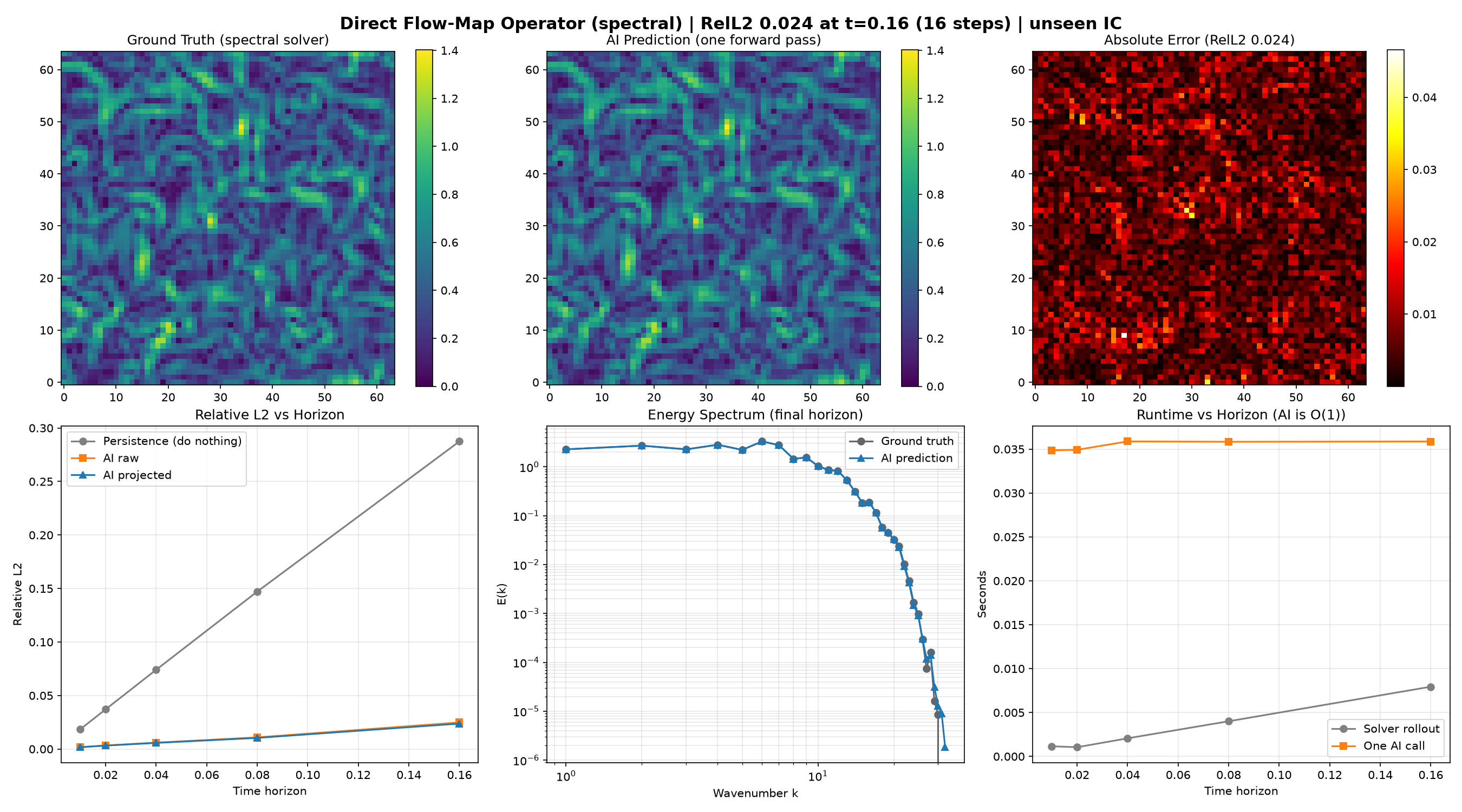
Measured results from the same study.
Published 9 Jul 2026 · Updated 4 Aug 2026
Each value below comes from the multi-shape holdout evaluation.
- 0.0030
- relative L2 error in the held-out multi-shape evaluation
- 96
- randomized geometries used for training
- 5.6×
- improvement over the earlier 64-cylinder model
- 15×
- reported margin over the “nothing changed” baseline
What the ≈35 ms measurement includes.
Published 9 Jul 2026 · Updated 4 Aug 2026
This is an average for one forward pass of the learned flow-map model on a 64×64 2D periodic case. It was measured on an Apple M3 Pro with PyTorch MPS across 40 warmed calls: eight held-out seeds at five requested horizons.
- Timed
- model forward pass + MPS synchronization
- Excluded
- loading, data preparation, UI, import, export, and reference solve
- Scope
- research benchmark · not end-to-end Studio latency
The average stayed flat across the five tested horizons because each request used one model pass. The paired reference solver was faster through the entire tested range at 64². This benchmark therefore does not establish a speed advantage over that solver or over conventional CFD.
Divide the field yourself.
Published 9 Jul 2026 · Updated 4 Aug 2026
Solver ground truth and the model’s one-forward-pass prediction for an unseen rectangle at Re 301, sixteen requested steps ahead (t=0.64). Drag the divider or use the arrow keys to inspect where the wake phase drifts.
- Case
- held-out rectangle · Re 301 · L 0.70
- Horizon
- 16 steps · one forward pass
- Wake RelL2
- 0.037 at t=0.64
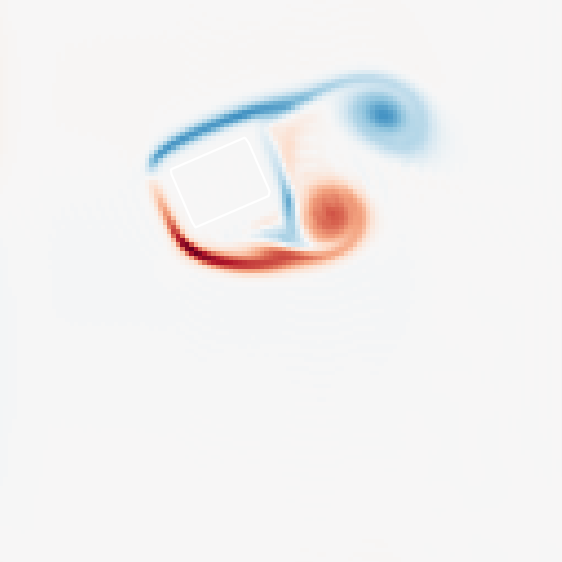
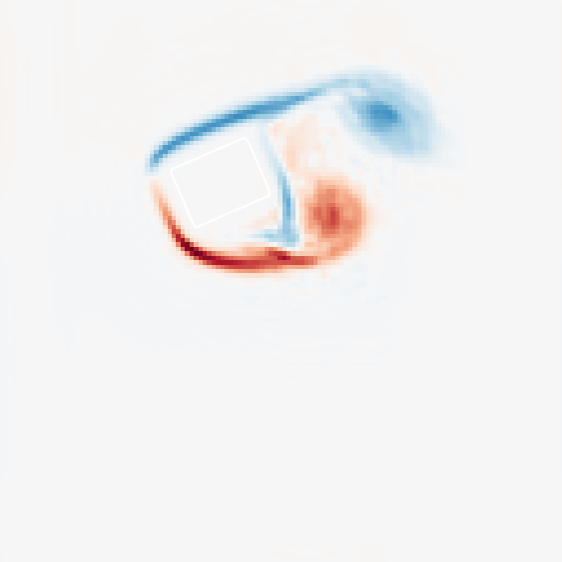
Vorticity panels from wake evaluation figure · held-out geometry study
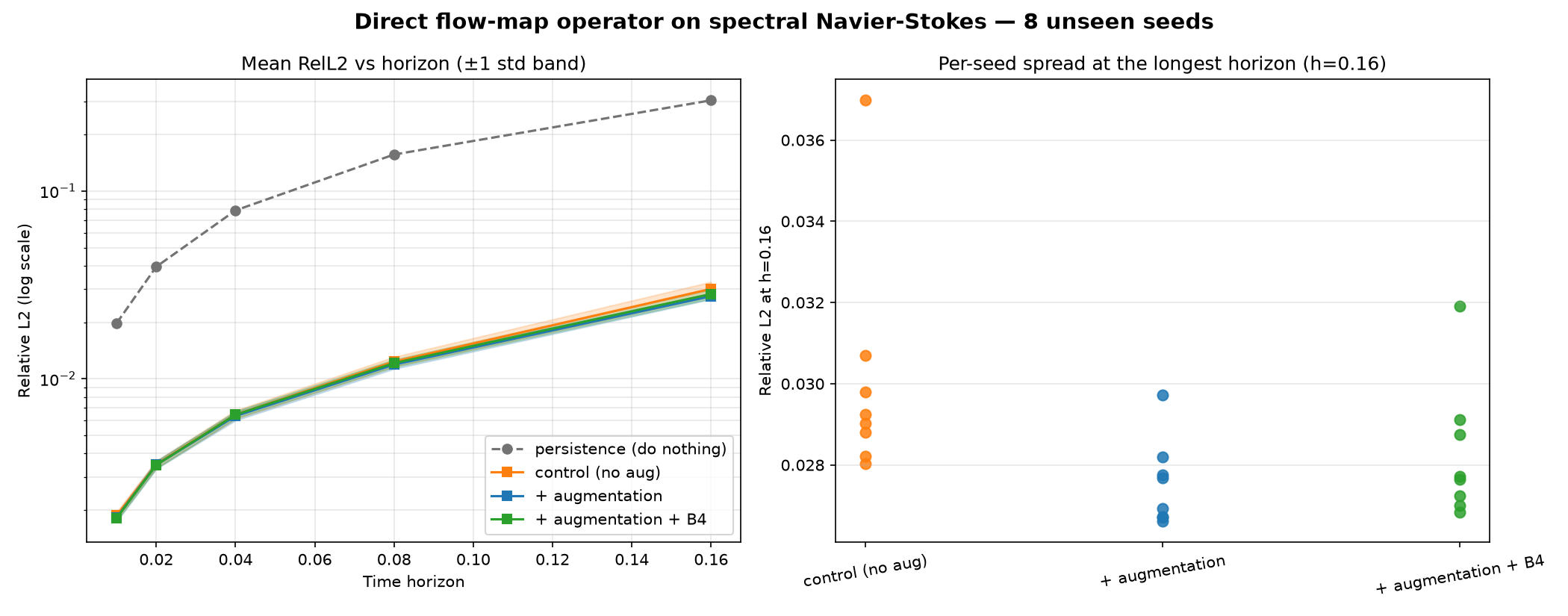
Pictures can look right while the numbers are wrong.
Published 9 Jul 2026 · Updated 4 Aug 2026
The evaluation compares full fields, the “nothing changed” baseline, and visible wake errors. That combination catches failures that a convincing image can hide.